K-pop Concert Tickets: Read VIP Benefits, Seat Details and View Warnings Separately
Compare the actual offer rather than its label: separate seat information, obstructed-view warnings, VIP extras, upgrade prerequisites and attendee conditions.
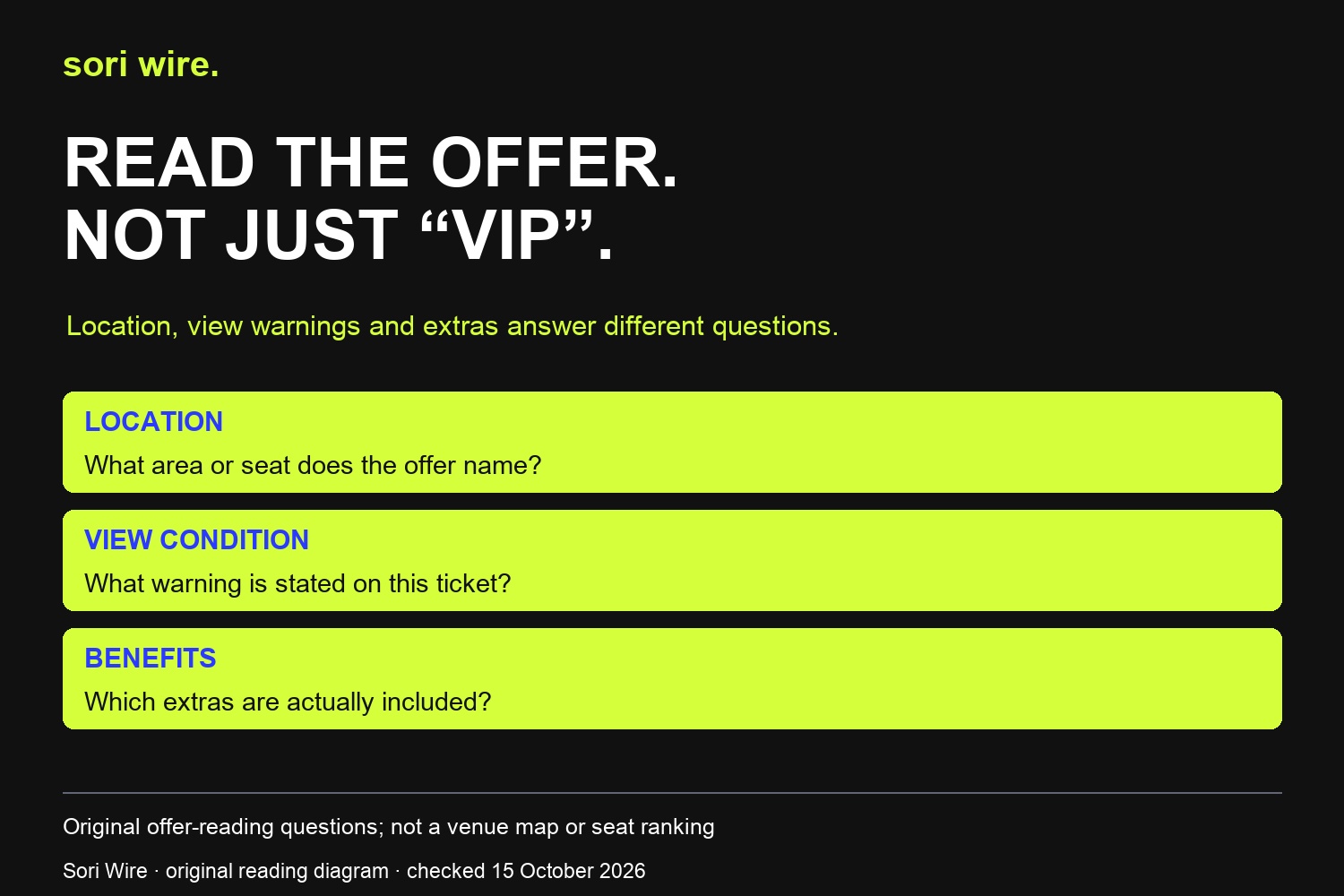
You have found a concert listing, but the ticket names raise another set of questions. Does VIP include the experience you want? Does a coloured dot tell you about the view? Can a ticket transfer carry its extras with it? This guide gives international K-pop fans a way to read those fields separately, using Ticketmaster’s US help and a closed TWICE Japan upgrade offer. Our original diagrams are reading worksheets, not venue maps. We have not inspected an individual seat, tested a purchase or measured a view. The goal is to help you identify what the actual offer states before you choose.
At a glance
- Three fields
- Read location, viewing conditions and additional benefits separately.
- VIP scope
- Packages vary; a familiar name does not promise soundcheck.
- View labels
- A map colour is not a photograph or measurement of a seat’s view.
- Historical example
- The TWICE 2025 upgrade offer is closed and had ticket prerequisites.
In this guide
Start with the full offer, not its most attractive word
A ticket name is a starting point for reading, rather than a complete description of what you will receive. Save the exact offer name, event date, seller and link before comparing it with another option. In your own notes, separate the admission ticket, the location information and any additional benefits. These are our editorial comparison fields; they are not a promise that every ticket seller divides its products the same way.
Ticketmaster’s US VIP help says packages vary between artists and that not every event offers them. That is a reason to open the named package details rather than importing a list from another tour. A package your friend enjoyed can help you decide which questions to ask, but it cannot establish the benefits of this event. The useful evidence is the offer you are actually considering.
Our suggested first question is concrete: what does this product explicitly include? Put each listed element on its own line. If a desired experience is absent, leave it unconfirmed. Avoid upgrading an attractive label into a more generous description. You can still prefer one option without presenting your preference as something the organiser guaranteed to every buyer.
Separate a seat location, a viewing condition and a benefit
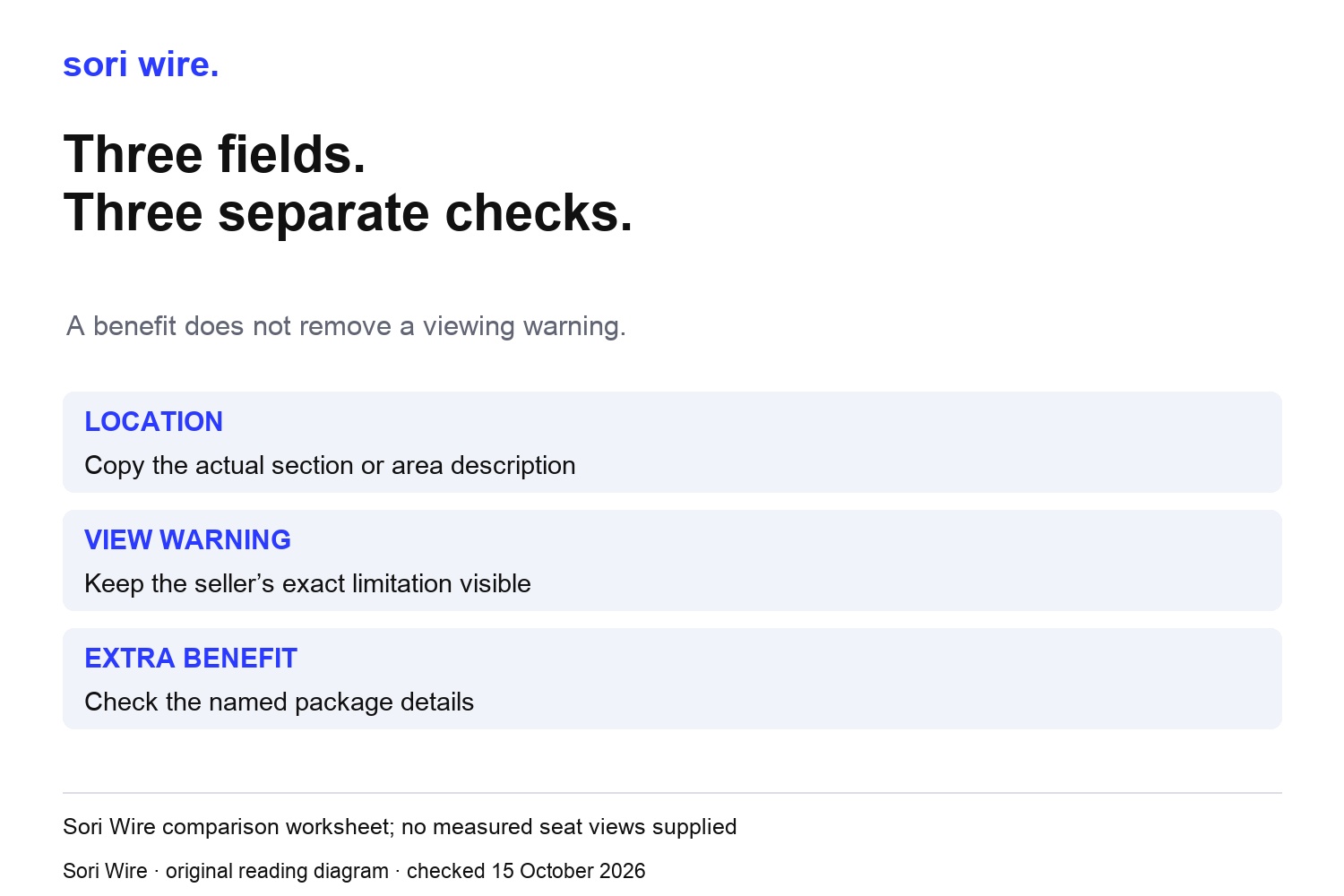
Our comparison worksheet keeps three kinds of information apart. Location describes the section or other area named by the seller. Viewing conditions describe a warning or limitation attached to that offer. Benefits describe additional elements stated in the package details. Reading all three helps prevent a familiar section name from silently answering a question about an experience or a view.
For example, the question does this include soundcheck belongs in the benefit column, not in the location column. A ticket in an area you associate with a previous package is not enough evidence to fill that field. Similarly, a benefit description does not remove a viewing warning elsewhere on the page. Check the actual text instead of expecting one marketing word to settle every condition.
Use the worksheet to compare like with like. Copy the listed information for each candidate offer, then mark missing details as not stated. You do not need to invent a numerical value for the view or rank packages by an assumed level of closeness. This guide provides no current price comparison, distance measurement or recommended section for a named venue. Those would need additional event-specific evidence.
Read a view warning literally
Ticketmaster’s US help explains that obstructed view can mean an incomplete view because something lies in the sight line. It also identifies labels such as No Stage View, Video View and Listening Only as indicating no view of the stage. Keep the warning attached to the exact ticket you are considering rather than replacing it with a softer description from a different listing.
Our recommendation is to record the warning verbatim in a private comparison note, then ask the seller or venue about the unresolved point that matters to you. This guide does not tell you whether an individual obstruction would affect your enjoyment. It also does not conclude that a warning is harmless because a previous attendee posted an appealing picture. Their picture may concern a different seat, stage layout or moment.
If you choose to compare attendee images, treat them as additional context rather than the organiser’s specification. Keep the original ticket condition visible while making your own decision. No diagram here simulates a view or suggests that an unlabelled seat must provide an uninterrupted experience. We have not visited the venue or checked the production layout for a current performance.
A map colour is not a seat-view photograph
Ticketmaster describes its interactive map as a search tool. Its help explains that colours reflect availability within your selected filters: gray may mean unavailable or not matching your search. This distinction concerns the search results, not whether a seat has an attractive view. Do not turn a colour legend into a rating system for the stage experience.
For your own comparison, open the ticket details and keep any warning alongside its section information. If an offer seems absent, check whether your selected ticket type or price filter is relevant before declaring it sold out. These are reading suggestions based on the provider’s help, not a claim that we have checked present stock. A published guide cannot tell you which seats are still available at the moment you open a sale.
Our diagram deliberately contains no coloured seating plan, row numbers or venue geometry. It helps separate the questions you need to answer, while leaving the actual map with the seller. When sharing a result with another fan, include the event and offer context rather than only a cropped map. A useful explanation should say what the search showed and what it did not establish.
An upgrade can depend on a ticket you already hold

TWICE’s official Japan tour page provides a historical example of an upgrade with prerequisites. The closed 2025 offer required an existing ticket obtained through the ONCE JAPAN+ long-term-member earliest presale, with the same performance and the same number of tickets. It described a lottery and did not guarantee success. We use that limited example to show why an upgrade should not automatically be read as a standalone ticket available to anyone.
The listed benefits included an arena-area assurance, original goods and a dedicated entry lane. That list did not establish a soundcheck benefit, and its arena description should not be expanded into an exact row or an unobstructed-view guarantee. The example is closed; this article does not announce a new opportunity, reproduce a current price or tell a reader that they qualify for it now.
Before comparing an upgrade with a complete package, identify what must already be held and what the new purchase adds. Keep those conditions on separate lines. If you cannot locate the prerequisite, return to the named offer instead of assuming that another ticket from the same tour will work. The official album artwork accompanying this section is representative artwork, not a photograph from an upgrade area or proof of a particular seat experience.
Transferring admission and transferring extras are separate questions
Ticketmaster’s US VIP help says the additional package elements it names are not transferable. Keep that provider statement separate from any claim about whether a particular admission ticket can be transferred. A valid-looking seat listing does not by itself establish that the original merchandise or experience will follow it to a new attendee. Read the actual offer and the relevant transfer instructions together.
Our suggested comparison has a field for the admission arrangement and another for each extra you care about. If you are considering a ticket from a previous buyer, do not fill the second field from the package name on an old screenshot. Ask what the official event terms support. This guide does not investigate a private resale listing or guarantee that a seller can deliver an experience.
Different providers and events can use different arrangements, so do not apply this help page as a universal rule for every K-pop show worldwide. The practical lesson is narrower: benefits need their own evidence. Keep the issuer, the offer and the relevant conditions linked in your note. If the answer remains unclear, preserve that uncertainty instead of estimating the value of an extra you cannot confirm.
Check the named attendee rules before treating two offers as equivalent
A comparison can look complete while missing the conditions for the person who will actually attend. Look for the event’s own applicant, companion, identification and distribution instructions. Do not treat them as a universal list that can be copied from another tour. Our earlier Japan sales-route guide addresses those route-level checks; here they are a final field in the offer comparison, rather than a new set of claimed admission rules.
The question to write down is specific: does the named offer explain what this attendee must do? If it does not, use the official support contact and ask about the missing condition. A general package description is not enough to establish which identity document a particular venue will accept. This article neither requests your identity documents nor certifies whether you can enter with them.
Keep the answer with its source and checked date so you can revisit it before acting. If someone else is comparing the same event, share the official link and the unresolved question rather than publishing private ticket details. A careful comparison can be useful without collecting personal information. The purpose is to prevent a benefit label or seat number from standing in for a condition the organiser still needs to clarify.
Keep a decision note, not an invented best-seat ranking
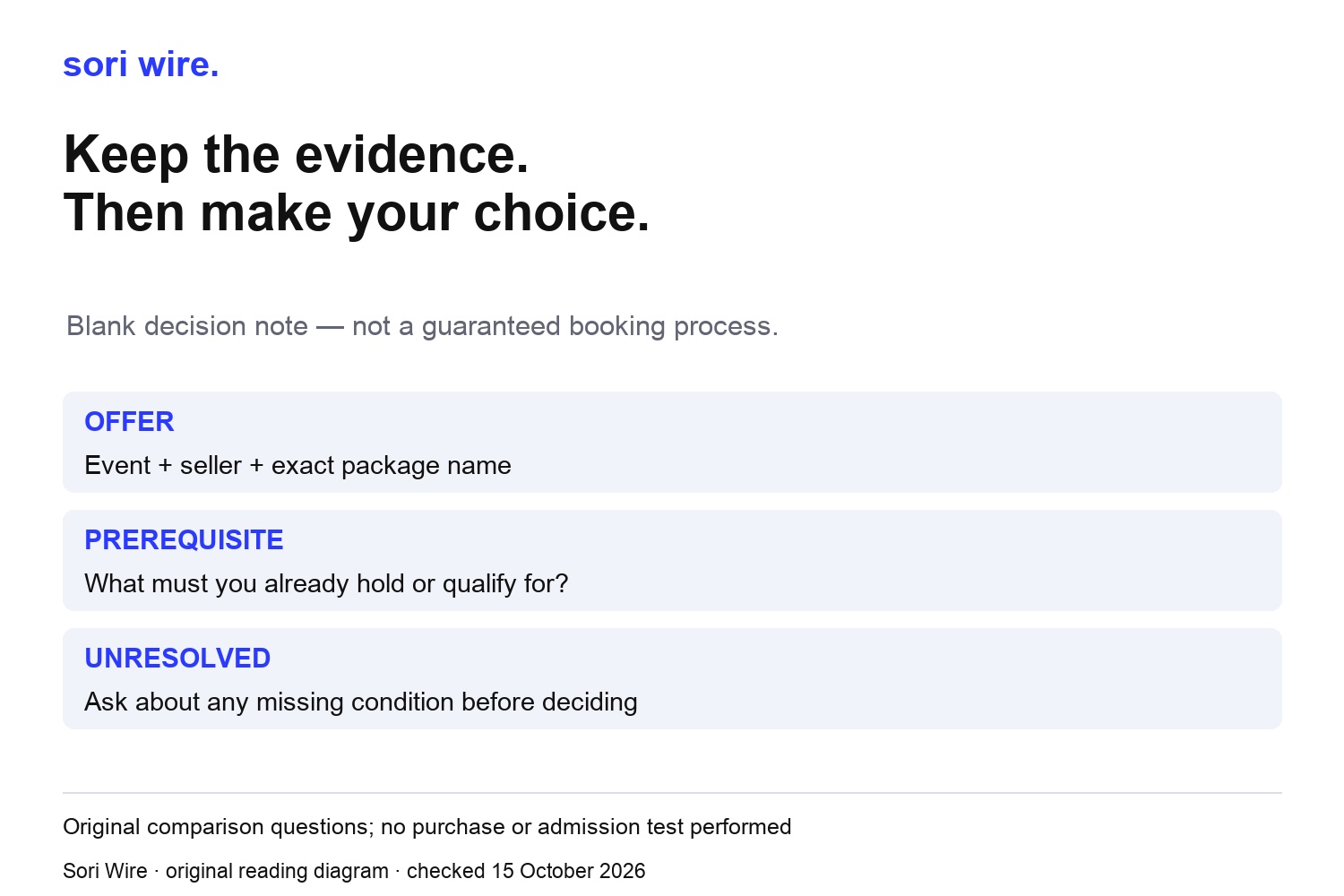
Bring the fields together before choosing: exact offer, event, stated location, viewing warning, included benefits, prerequisites and relevant attendee conditions. Our worksheet also has room for questions. Use it to see whether the options you are comparing genuinely describe the same kind of product. A cheaper admission ticket and an upgrade requiring an existing ticket should not be compared as if both were complete alternatives.
Once the facts are separated, your personal preferences can do their proper work. Decide which stated elements matter to you and which unresolved conditions would change your choice. This is editorial planning advice, not a recommendation to buy a specific ticket or spend more for a label. We provide no invented audience ratings, travel experience, sight-line calculations or probability of getting a preferred location.
Finally, retain the source link rather than just your final conclusion. Offer details and event instructions should be checked at the time you need them. A good decision note explains what you considered and why, while leaving the seller’s actual wording available for review. It makes the next conversation clearer: you can discuss a specific benefit or warning instead of asking a single word such as VIP to describe the whole evening.
How this guide was made
Official Ticketmaster US help and closed2025 TWICE Japan upgrade section checked October15 2026. Provider rules not generalized worldwide. No current ticket inventory, price, individual view, travel experience, purchase or admission tested. Official TWICE artwork is representative, unchanged, and not venue photography. Three original comparison worksheets are not seating maps or rankings.